Achieving Full Lifecycle Asset Management
with RFID Technology
LINKWIN Case Study
Company Profile
Headquartered in the United States, the company is a highly acclaimed Fortune 500 enterprise and one of the world’s leading consumer goods conglomerates. Its core product categories include hair care, skin care, fabric and home care, baby and family care, health care, food and beverages, and more.
Challenges & Project Requirements
Global consumer goods companies face complex issues in full lifecycle asset management, covering logistics, warehousing, security, and final disposal. Below are the challenges and requirements of this enterprise:
With an extremely large number of SKUs, the company needed a solution to manage assets across their entire lifecycle and track locations in real time, improving visibility and control over the entire value chain.
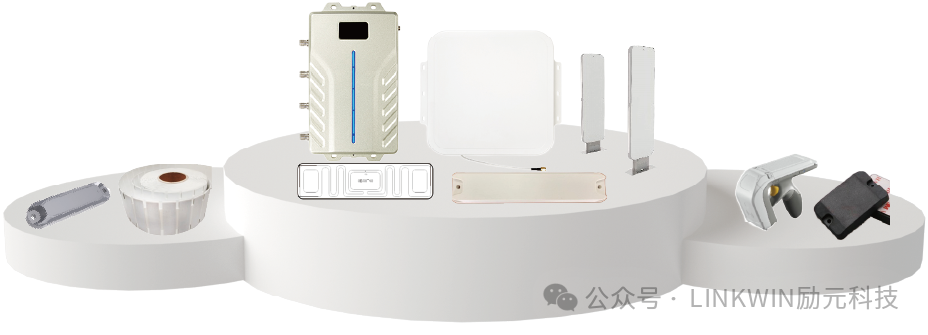
RFID标签、读写器、RFID通道门、手持扫描枪
RFID enables efficient, automatic collection of asset data, reducing manual errors and costs while improving data accuracy, reliability, and asset security.
The company aimed to achieve efficient and smart warehouse management to boost operational efficiency, add flexibility to production planning, adapt quickly to market changes, shorten inventory cycles, prevent waste, and improve asset turnover.
By installing RFID tags on key assets and RFID readers on forklifts, the company wanted real-time forklift monitoring and alerts to avoid collisions, enhancing safety in factories and warehouses for both employees and assets.
LINKWIN RFID Solution
for Full Lifecycle Asset Management
RFID technology enables the enterprise to manage assets accurately and efficiently across their entire lifecycle.
-
Associate Asset Information with RFID Tags
After procurement, each asset is bound with an RFID tag encoded with details such as barcode number, name, type, production date, and cost for full lifecycle control, allowing fast tracking and data querying in later stages.
RFID features long reading distance, strong multi-tag recognition, high-speed collection, and high durability.
-
Precisely Track Asset Lifecycle Stages
RFID tags provide real-time visibility of production data, including total quantity, location, and status of each asset.Records are automatically generated for usage, lending, transfer, maintenance, and other operations, ensuring full asset traceability.
-
Digital & Intelligent Optimization of Warehousing & Logistics
RFID tags attached to pallets and goods enable rapid inventory counting — several times faster than manual work — facilitating inbound/outbound statistics, goods location management, and stocktaking.
Automated warehouse management delivers real-time inventory quantity and location data, eliminating overstock and stockouts.
Product location and status are tracked throughout logistics via RFID.
Project Outcomes
-
Improved Inventory Efficiency & Accuracy
Handheld RFID readers enable fast, accurate asset identification, streamlining inventory checks and reducing error rates.
-
Real-Time Tracking & Monitoring
RFID-tagged assets allow real-time monitoring of location and usage, giving the enterprise full visibility of inventory status, movement routes, and supporting optimized resource allocation.
-
Optimized Inventory Management
RFID accurately records inventory quantity, location, and other details, enabling real-time updates and precise control, reducing overstock and shortages while improving turnover.
-
Lower Asset Management Costs
Reduced manual intervention and error rates lower overall asset management expenses.
-
Data-Driven Decision Improvement
Analysis of rich asset data delivers deeper insights into market demand, sales performance, and customer needs, supporting more agile and data-backed strategy adjustments.
About us