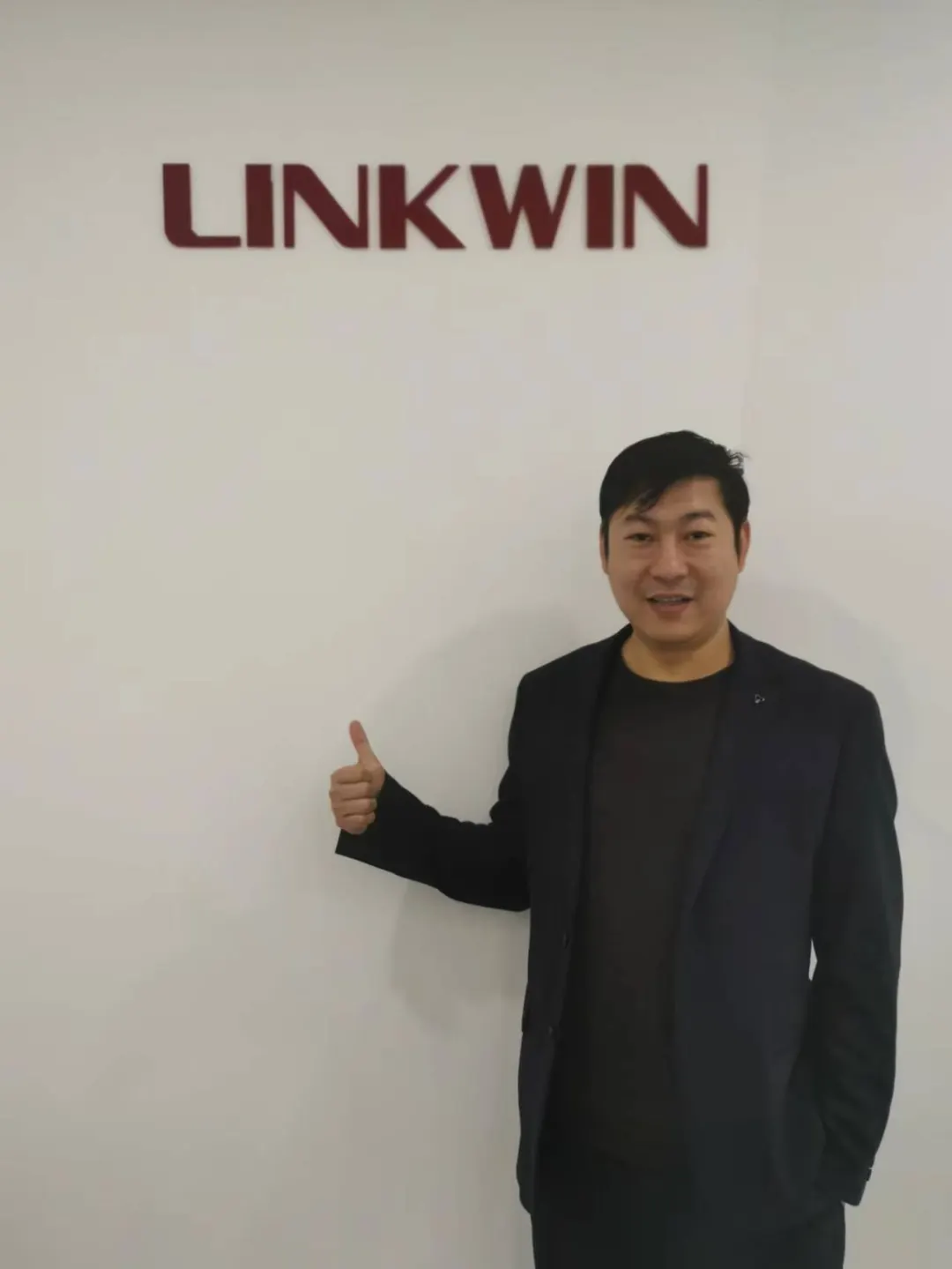
Sales Director of LINKWIN-Simon Wang
Thank you, Simon Wang, for accepting our interview. Please briefly introduce your company, including its development history, staff size, main business, and key upstream and downstream partners.

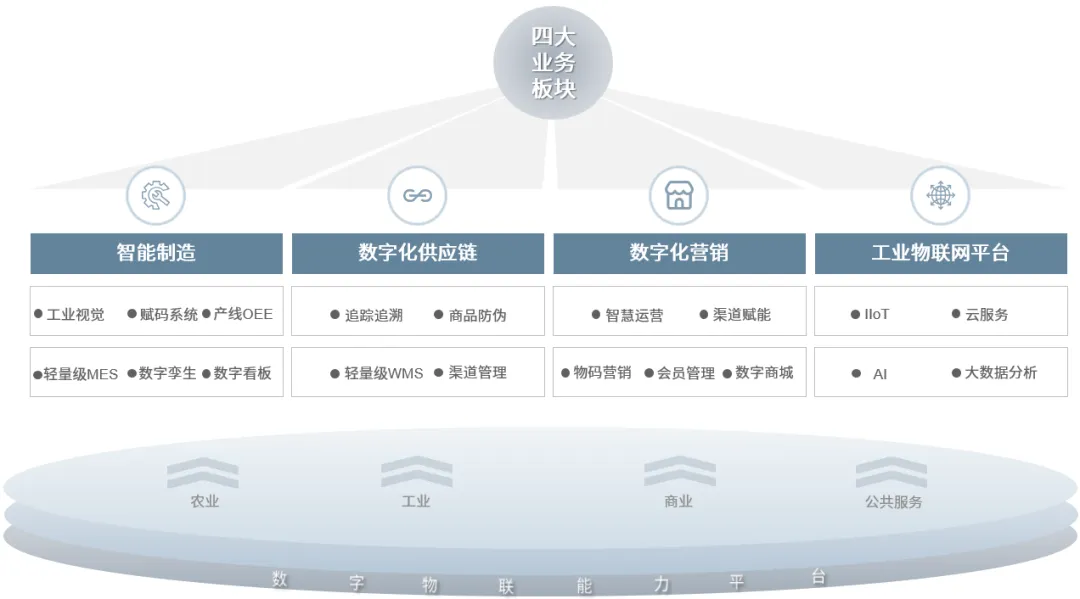
LINKWIN is a world-leading technology enterprise specializing in digital services and intelligent IoT. We are committed to providing customers with innovative solutions and premium operational services in intelligent manufacturing, digital supply chain, digital marketing, and industrial IoT platforms.LINKWIN is a world-leading technology enterprise specializing in digital services and intelligent IoT. We are committed to providing customers with innovative solutions and premium operational services in intelligent manufacturing, digital supply chain, digital marketing, and industrial IoT platforms.Since its founding in 2001, LINKWIN has served more than 300 customers in over 50 countries and regions worldwide, with business covering agriculture, industry, commerce, government affairs, and other sectors. Currently, the company has over 200 employees, more than 100 patents and software copyrights, and has established partnerships with nearly 1,000 well-known brands.
How are the company’s main business application areas distributed? Which application sectors account for the largest proportion? Which application areas is the company most optimistic about in the next 3–5 years?
LINKWIN has extensive service and product applications in agrochemicals, daily chemicals, FMCG, and other fields, with rapid growth in FMCG and daily chemicals at present.In the next 3–5 years, IoT applications will develop rapidly in smart home, smart mobility, industrial automation, intelligent manufacturing, healthcare, agricultural intelligence, energy and environment, etc. Specific scenarios include logistics and supply chain management, production process tracking of goods, consumer sales trends, real-time location and usage status, and more.
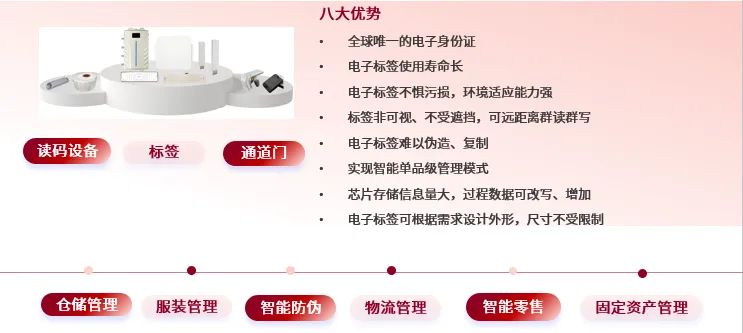
As one of the key technologies of the IoT, RFID is driven by multiple factors.First, the IoT has become a major driver of the new round of global technological and industrial revolution, and RFID serves as a critical enabler of the IoT. For example, from public transit to electronic toll collection systems, RFID reduces congestion and enables automated payment, delivering a more convenient user experience.
In terms of policies, the RFID industry is regarded as a priority development industry by the state. Since 2012, China’s Ministry of Industry and Information Technology, Ministry of Agriculture, Ministry of Commerce, Ministry of Finance, and other departments have issued a series of policies to promote and standardize the development of the UHF RFID industry. These policies provide strong support and guidance for RFID applications across industries.
Market demand is also an important driver. Although China’s RFID industry started relatively late, demand has grown rapidly. Especially post-pandemic, as the economy gradually recovers, market demand for RFID is expected to further expand.
In summary, RFID development is driven by both market demand and policy support. Backed by the IoT and national strategies, RFID has broad application prospects in the future.
How has the company performed in terms of revenue and growth over the past three years?
Affected by the pandemic and the global economic downturn, various industries have experienced demand degradation and cost optimization to varying degrees.Through high-quality services and long-term trusted customer partnerships, LINKWIN has achieved steady growth since 2020, with annual revenue increasing by 10%–15%.
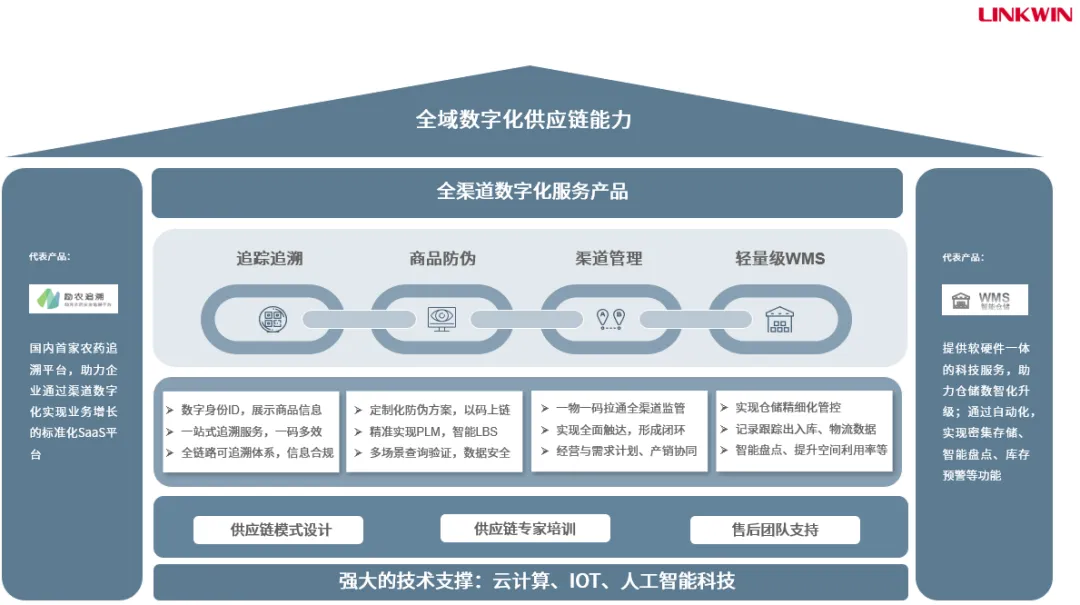
RFID offers powerful capabilities across many scenarios, and supply chain management is one of its most common applications. What is the current development status, market size, and industry growth rate of the supply chain management application market? What are the mainstream application solutions in the market today?
Development Status: In recent years, with the growth of global trade and logistics, the supply chain management industry has boomed. Driven by digital transformation and IoT technologies, the industry is evolving toward greater intelligence, efficiency, and sustainability. Our IoT and digital solutions are therefore highly synergistic.
Market Size: According to market research institutions, the global supply chain management market continues to expand. It reached approximately $1.48 trillion in 2019 and is projected to reach $3.72 trillion by 2025.
ndustry Growth Rate: The sector maintains steady growth. The global market grew at a CAGR of 8.2% in 2019 and is expected to remain above 7% through 2025.
Mainstream IoT & Digital Solutions for Supply Chain Management:
Real-Time Tracking & Visibility: IoT sensors track the location, status, and shipping conditions of logistics and goods in real time, improving management efficiency, optimizing logistics, and enabling more accurate delivery timelines.
Inventory Management & Optimization: IoT sensors and RFID automatically monitor inventory levels and goods movement, enabling real-time inventory visibility, reducing overstock and stockouts, and improving turnover rates.
Predictive Maintenance: IoT sensors collect equipment data to monitor and analyze potential failures and maintenance needs in real time, enabling preventive maintenance, lowering repair costs, and boosting productivity.
Intelligent Supply Chain Decisions: IoT data analysis supports more accurate supply chain decisions, helping enterprises forecast demand shifts, adjust production and logistics plans, and avoid inventory risks.
Visualized Physical Management: IoT technologies help build visualized asset management systems. Electronic tags provide real-time access to critical information such as production date and ingredients, shared across the IoT for stakeholders.
Traceability & Quality Control: End-to-end product traceability from raw material sourcing to production, logistics, and sales enables comprehensive quality management and issue root-causing, enhancing product quality and customer satisfaction.
Asset Management: RFID effectively manages fixed assets such as office equipment, machinery, and tools, reducing loss and misuse while improving efficiency.
Security & Access Control: RFID is applied in access control and vehicle entry systems via employee or vehicle tags, enabling fast, secure identity verification.
Environmental Monitoring & Sustainability: IoT sensors track temperature, humidity, energy consumption, etc., supporting optimized resource use, reduced environmental impact, and sustainable development goals.
Price reduction of IoT hardware is a clear trend. How do enterprises respond to this situation, improve revenue and profit, and expand value beyond hardware?
LINKWIN adopts the following strategies to address falling hardware prices, enhance profitability, and create value beyond hardware:
Value-Added Services: Provide high-value-added services such as data analysis, predictive maintenance, and remote monitoring to diversify revenue streams.
Data Analytics & Insights: Analyze and mine data collected by IoT devices to deliver actionable insights and optimization solutions for customers.
Product Design Optimization: Improve product performance and functionality to enhance perceived value, while adopting new materials and technologies to lower costs.
Ecosystem Building: Collaborate with other enterprises to build an IoT ecosystem, enriching offerings and increasing customer stickiness.
Subscription Model: Adopt subscription-based services for stable recurring revenue, with tiered pricing for enhanced features.
Training & Education: Offer IoT training and educational resources to improve user efficiency and satisfaction, generating service revenue.
Continuous Innovation: Invest in R&D to develop cutting-edge IoT technologies and solutions, strengthening market competitiveness and expanding market share.
Fragmentation is common in IoT, requiring integration and customization of many hardware and software products. How does the company optimize products for standardization amid fragmentation?
The IoT industry faces significant fragmentation, with diverse devices, technologies, and applications lacking unified standards and interfaces, which may hinder large-scale deployment.
Standardization is critical to addressing this issue. The Action Plan promotes IoT standardization by establishing a standard system and formulating key standards, planning to develop or revise over 40 national or industry standards within three years through cross-industry collaboration. Meanwhile, the commercialization of 5G has shifted IoT from fragmented applications to integrated cross-border innovation, creating new opportunities for standardization.
Beyond standardization, the IoT requires regulation, formatting, modularity, and scalability to limit further fragmentation. Concepts such as IoT grids aim to unify the management of relationships between objects and their environments.
Overall, maximizing and standardizing IoT requires coordinated efforts in technology, policy, and market to ensure healthy, rapid, and stable development.
For digital supply chain solutions, what is the typical cost ratio between hardware and software? What pain points still exist in hardware and software? How does the company optimize its hardware and software products to address these pain points?
The cost distribution varies by enterprise size, industry, and specific requirements. A typical breakdown is:
Hardware Cost (40%–60%): Servers, network devices, storage, terminals, and maintenance.
Software Cost (30%–50%): ERP, CRM, SCM systems, plus implementation, training, and maintenance.
Labor Cost (10%–20%): Project managers, analysts, data specialists, and related personnel.
Other Costs: Consulting, training, travel, etc.
This ratio is for reference only and will be adjusted based on actual conditions.
Key Pain Points in Hardware & Software:
Rapid Technological Obsolescence: Requires continuous investment in upgrades, creating short-term financial pressure.
High Upfront Investment: Burdensome for SMEs.
System Integration Challenges: Disparate systems across production, warehousing, and logistics complicate integration.
Data Security & Privacy Risks: Growing data volume increases breach and cyberattack risks.
Talent Shortage: Shortage of skilled professionals for digital supply chain management.
Low User Adoption: Resistance from staff unfamiliar with new systems.
Regulatory Restrictions: Compliance requirements in certain regions.
Supplier Dependence: Over-reliance on external vendors risks operational disruption.
What is the implementation model of RFID in industrial scenarios? In what ways does the company demonstrate its competitiveness and advantages in projects?
As a contactless automatic identification technology, RFID is widely applied in logistics, retail, transportation, healthcare, manufacturing, and other industries. Amid intelligent manufacturing transformation, RFID is increasingly favored for its low deployment cost and convenient data collection.
Major Industrial Applications:
Mixed-Model Production: RFID tags on parts and pallets enable smart communication with equipment, avoiding delays from delayed data capture.
Asset Management: Real-time monitoring of fixed assets and tools to improve utilization.
Warehouse Management: Automated inbound/outbound recording for higher accuracy and efficiency.
Supply Chain Management: Real-time cargo tracking for smooth operations.
Production Line Automation: Automated process control to boost efficiency and quality.
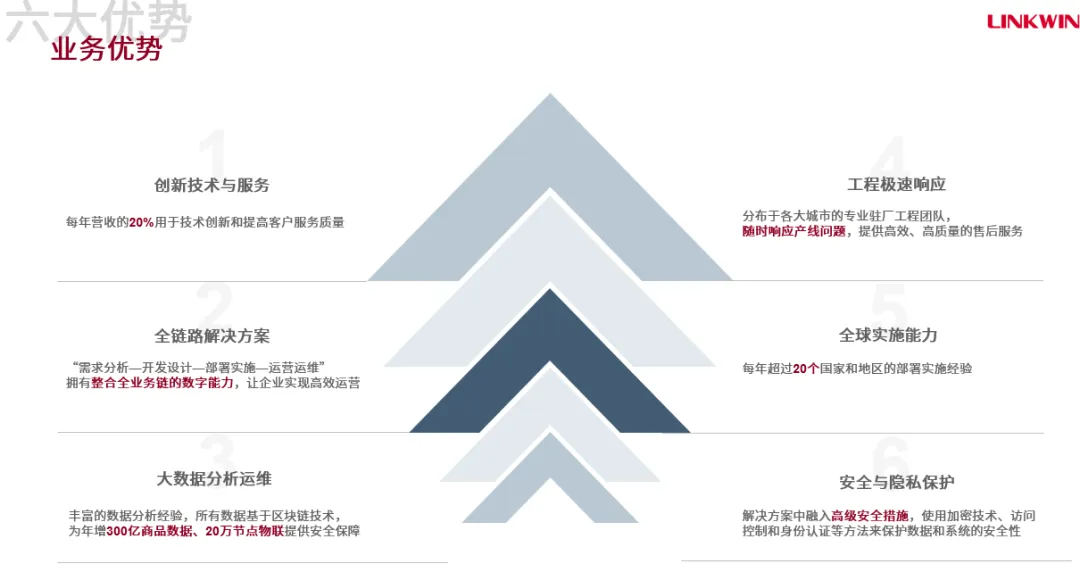
For LINKWIN, we started with anti-counterfeiting and labeling in 2001 and have deep industry insights. Our core value lies in successful on-the-ground project delivery. Having served numerous Fortune 500 companies, we have built standardized solutions for complex scenarios that support fast-growing SMEs in cost reduction, efficiency improvement, and management upgrading at every stage.We also run a dedicated Competence Development Center to track cutting-edge technologies and integrate them into practical solutions, delivering tangible benefits to customers.
Could you share a case of LINKWIN’s RFID applications in industrial and supply chain management? What specific results were achieved? Can the advantages of digitalization be quantified?
- Reengineered business processes and integrated systems to eliminate data silos and ensure data accuracy.
- Customized and enhanced software with logical automation to reduce manual input and errors.
- Deployed smart hardware and RFID to replace manual operations, ensuring precise data collection.
- Data accuracy improved to 99.99%, with real-time error correction.
- Asset management time reduced by 80%: one week of work now takes one day.
- Direct and indirect cost savings of nearly ¥3 million within the first year.
- The client is now planning group-wide rollout to subsidiaries.
From your perspective, what new changes and trends have emerged in the RFID industry in recent years (in technology, products, customer demand, etc.)?
Wider Application Scope: Beyond traditional logistics, retail, and inventory, RFID is expanding into smart transportation, healthcare, agriculture, energy management, and more.
Advanced Tag Technology: Smaller, lower-power, lower-cost tags with larger memory and faster read-write speeds. Extended-range UHF tags deliver greater value in supply chains.
IoT-RFID Convergence: Deeper integration with sensors and wireless communications enhances data collection, device interconnection, and remote monitoring.
RFID + Cloud Computing: Cloud platforms enable scalable data storage and refined, intelligent management.
Enhanced Security: Stronger encryption and authentication protect data and communications.
RFID + AI: Machine learning enables intelligent analysis, forecasting, and optimization from RFID data.
About us